
Improve Vulnerability Prioritisation and Detection
Use Vulmatch to decide what matters first and to support hunting and detection work with richer vulnerability context.
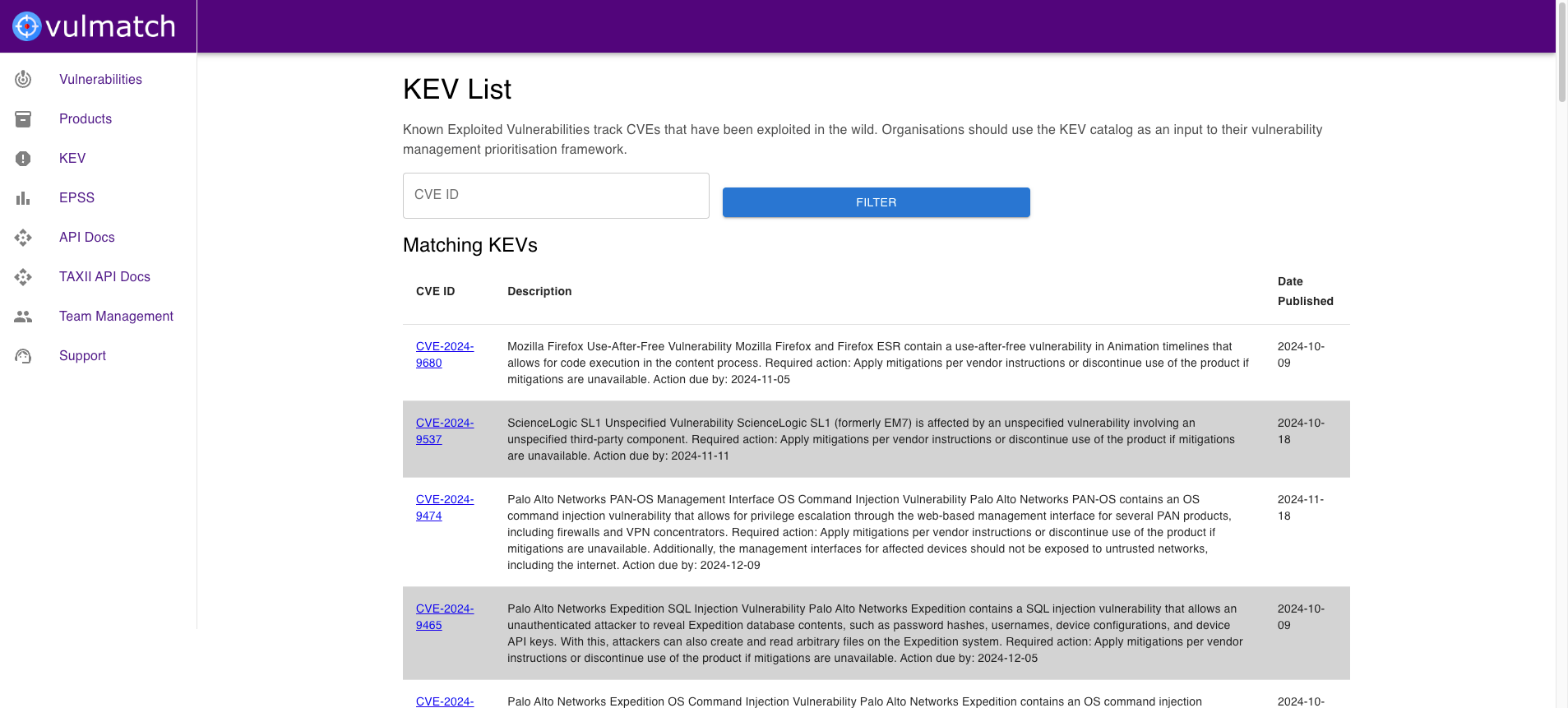
Overview
Severity alone is rarely enough to prioritise vulnerabilities well. Vulmatch helps teams move beyond a flat CVE list by layering in exploitability, affected software, and attack-context enrichment that is useful for both remediation planning and detection engineering.
Why this matters
Security teams need to decide not only what to patch, but also what to monitor, what to hunt for, and what to escalate when patching is delayed. Vulmatch supports that work by making it easier to compare vulnerabilities using multiple signals instead of relying on a single score.
How Vulmatch helps
Vulmatch can support prioritisation and detection workflows by helping teams:
- filter and compare vulnerabilities using CVSS and EPSS context
- review exploit-related enrichment when active exploitation is a concern
- understand how vulnerabilities relate to affected products and software versions
- support detection coverage when exposure cannot be removed immediately
- connect a vulnerability to ATT&CK or CAPEC context that helps analysts reason about likely attack paths
- review known exploited vulnerability context when remediation timing matters
Typical outcomes
Teams use Vulmatch to create shorter review lists, accelerate patch triage, and give detection engineers better context when they need to monitor a vulnerability before a fix is fully deployed.
This is especially useful when a team cannot patch immediately and needs a more informed answer to what should be watched, hunted, or escalated in the meantime.