
Map Vulnerabilities to Products and SBOMs
Use Vulmatch to connect vulnerability records to affected software and to support SBOM-oriented monitoring workflows.
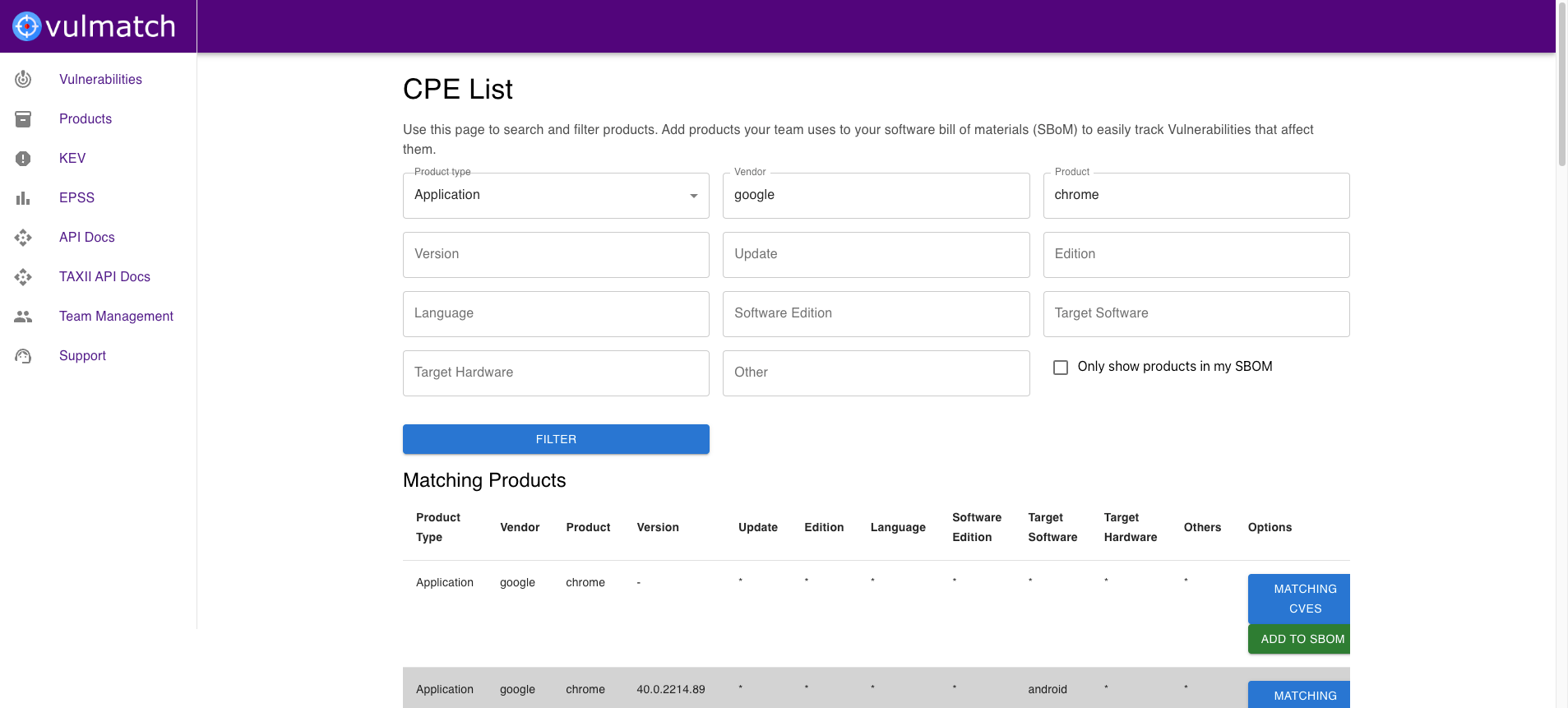
Overview
This use case is for teams that care less about the full CVE stream and more about the subset that actually affects their products, dependencies, or environment. Vulmatch helps by linking vulnerability records to software identifiers and supporting workflows that focus on the software inventory that matters.
Typical workflow
Teams search for affected software, track relevant product identifiers, and use that context to narrow vulnerability monitoring to the products they operate or support. In environments with SBOM practices, this helps translate a software inventory into a more focused vulnerability review process.
Why teams use Vulmatch here
Vulmatch is useful when teams need a structured way to work from software to vulnerability, not only from vulnerability to software. That makes it easier to answer questions such as:
- what vulnerabilities affect this product
- which versions or product families need review
- what should we watch over time for software in our estate
This workflow matters most when teams want Vulmatch to reflect their own software exposure rather than a generic global feed. In connected environments, those software relationships can also flow into OpenCTI or other downstream systems.