
Operationalise Vulnerability Intelligence
Use Vulmatch to turn CVE data into a structured vulnerability intelligence workflow that analysts and downstream tools can actually use.
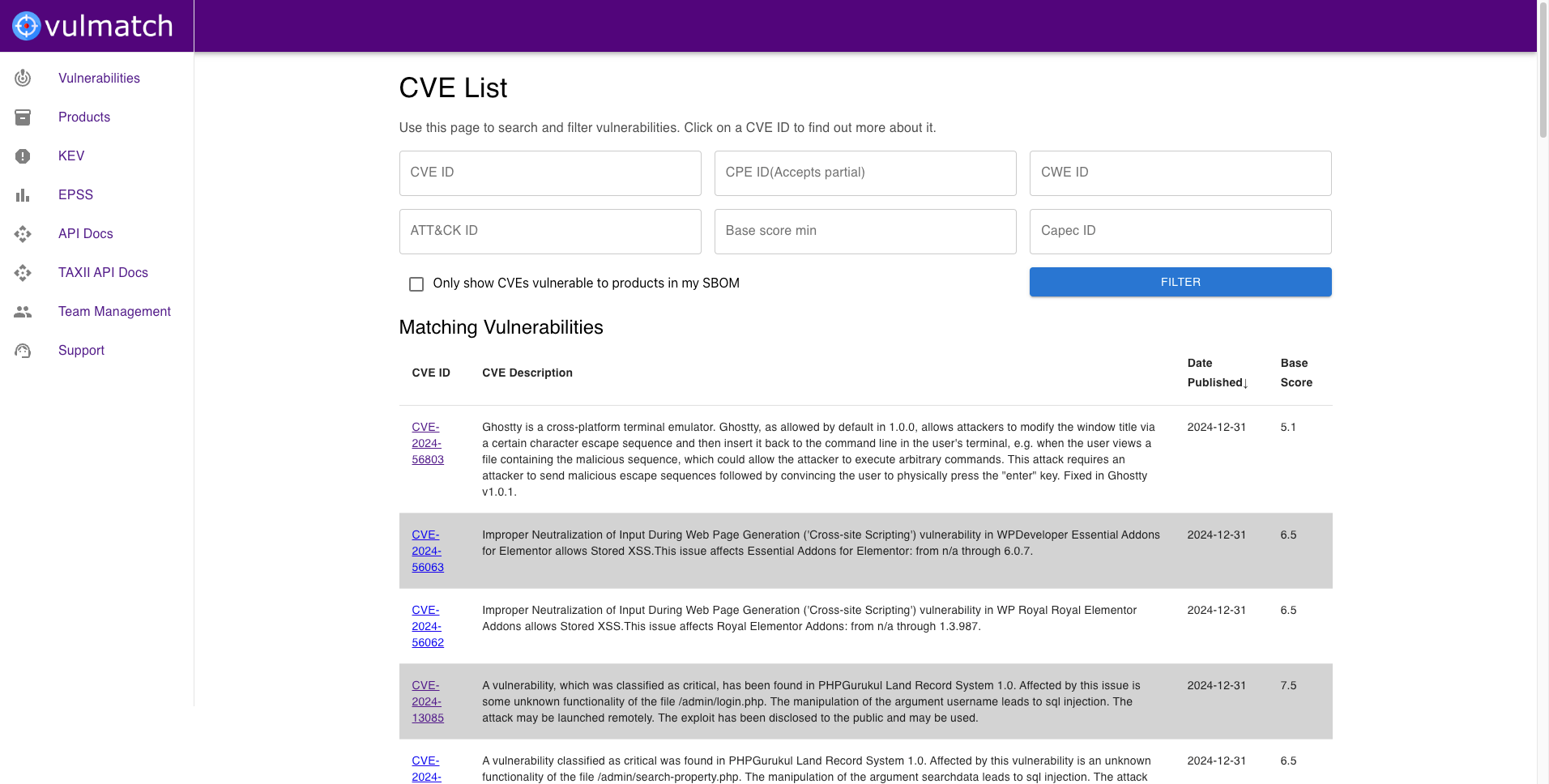
Overview
Many teams already have access to CVE feeds, advisories, and product bulletins. The real challenge is making that information usable across day-to-day operations. Vulmatch helps teams operationalise vulnerability intelligence by structuring vulnerability records, exposing key enrichment fields, and making the data queryable in both analyst and machine-driven workflows.
Why teams use Vulmatch for this
Vulmatch helps centralise the context analysts usually have to assemble by hand. Instead of bouncing between vulnerability records, scoring systems, product identifiers, and downstream notes, teams can work from a single intelligence layer built around the vulnerability itself and the relationships that matter.
This is useful when teams need consistent answers to practical questions such as:
- which vulnerabilities affect the software we care about
- which records need urgent review because exploitability is rising
- which vulnerabilities should move into detection, research, or reporting workflows
What this looks like in practice
Teams often use Vulmatch to support operational workflows such as:
- vulnerability triage based on exploitability and product context
- product-centric monitoring using CPE and SBOM relationships
- exporting structured vulnerability intelligence into other security tools
- sharing STIX-based bundles for collaboration and further analysis
Example outcomes
When teams operationalise Vulmatch well, they can:
- move from raw CVE lookup to structured vulnerability intelligence review
- standardise how analysts compare severity, exploitability, weaknesses, and affected software
- make vulnerability context available to downstream tools without rewriting it by hand
- use the same source of truth across analyst, engineering, and graph-based workflows